Buy laufsporty.eu ?
We are moving the project
laufsporty.eu .
Are you interested in purchasing the domain
laufsporty.eu ?
domain@kv-gmbh.de · 0541-91531010
Buy laufsporty.eu ?
Can Spider-Man produce and shoot webs without his suit?
In most versions of the Spider-Man story, Peter Parker gains the ability to produce and shoot webs from his own body after being bitten by a radioactive spider. This ability is not dependent on his suit, so he can still produce and shoot webs even without wearing it. However, in some adaptations, such as the Sam Raimi Spider-Man movies, Peter invents web-shooters that he wears on his wrists to help him control his web-slinging abilities. **
What are dust-catching webs in spider webs called?
The dust-catching webs in spider webs are called "capture silk" or "gumfoot lines." These specialized silk threads are sticky and help the spider to capture prey by ensnaring them as they walk across the web. The capture silk is strategically placed in the web to maximize the spider's chances of catching insects and other small creatures. **

Similar search terms for RoomMates-Spider-Man-Webs-Charcoal-Peel
Top-Angebote
Products related to RoomMates-Spider-Man-Webs-Charcoal-Peel:
-
RoomMates-Spider-Man Superpowers Black and White Peel and Stick WallpaperBring Marvel's Spider-Man home with this sketch-style wallpaper, packed with web-shooter diagrams, masked close-ups, and handwritten equations sprawled across a grid paper background. Bring Marvel's Spider-Man home with this sketch-style wallpaper..59,99 $*Shipping: 0,00 $Secure redirect to the provider
-
RoomMates- Spider-Man Superpowers Red and Blue Peel and Stick WallpaperBring Marvel's Spider-Man home with this sketch-style wallpaper, packed with web-shooter diagrams, masked close-ups, and handwritten equations sprawled across a grid paper background.59,99 $*Shipping: 0,00 $Secure redirect to the provider
-
Inspired Finds Super Stretch Halloween Spider Webs With Fake Spiders Super Stretch Halloween Spider Webs With Fake SpidersTransform an ordinary room or yard into a creepy abandoned scene with Halloween spider webs that stretch into thin, realisticlooking strands. With up to 200 sq ft of coverage, this stretchable cobweb decoration gives you plenty of material for...34,99 $*Shipping: 0,00 $Secure redirect to the provider


-
How are spider webs formed?
Spider webs are formed when a spider releases silk from its spinnerets, which are located at the back of its abdomen. The silk is produced as a liquid, but it quickly hardens into a solid thread when exposed to the air. The spider then uses its legs to pull and shape the silk into intricate patterns, creating the structure of the web. The design and shape of the web can vary depending on the species of spider and its hunting habits. **
-
Where can spider webs be found?
Spider webs can be found in a variety of locations, including outdoor areas such as gardens, forests, and fields. They can also be found indoors in places like basements, attics, and corners of rooms. Spider webs are commonly seen on bushes, trees, fences, and other structures where spiders can easily build their webs to catch prey. **
-
Where are there spider webs everywhere?
Spider webs can be found everywhere, but they are most commonly seen in outdoor areas with vegetation and in corners of buildings. They are also often found in dark, undisturbed areas such as basements, attics, and storage spaces. Additionally, spider webs can be found in areas with a high insect population, as spiders build their webs in locations where they are likely to catch prey. **
-
How do spiders create spider webs?
Spiders create spider webs by producing silk from their spinnerets, which are located at the back of their abdomen. The silk is made from proteins that are produced in the spider's silk glands and then forced through the spinnerets. The spider uses its legs to pull and shape the silk into the intricate patterns of the web. The silk is then left to harden and form the structure of the web, which the spider uses to catch prey. **


Why do we see spider webs, but no spider?
We may see spider webs without seeing the spider because spiders are often nocturnal and hide during the day. They may also be camouflaged within their surroundings, making them difficult to spot. Additionally, spiders may build their webs in hidden or hard-to-reach areas, further reducing the chances of seeing them. However, the presence of spider webs is a clear indication of the spider's activity in the area. **
What are Spider-Man's webs made of?
In the original Spider-Man comics, Peter Parker creates his web fluid using a formula of his own invention. The web fluid is a synthetic polymer that solidifies upon contact with air, creating the iconic webbing that Spider-Man uses to swing between buildings and capture villains. The exact composition of the web fluid has varied over the years in different adaptations, but it is typically depicted as a strong, adhesive substance that can be shot from devices on Spider-Man's wrists. **
Top-Angebote
Products related to RoomMates-Spider-Man-Webs-Charcoal-Peel:
-
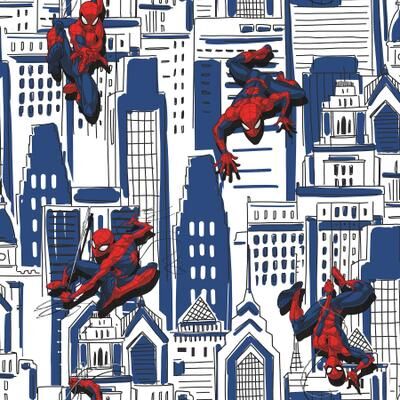
Blue Spider-Man Cityscape Peel and Stick Wallpaper by RoomMatesSave the city alongside your friendly neighborhood Spider-Man with this officially-licensed Marvel Spider-Man Peel and Stick Wallpaper! Spider-Man swings through a blue cityscape in this epic print. The most amazing part?37,34 $*Shipping: 0,00 $Secure redirect to the provider
-
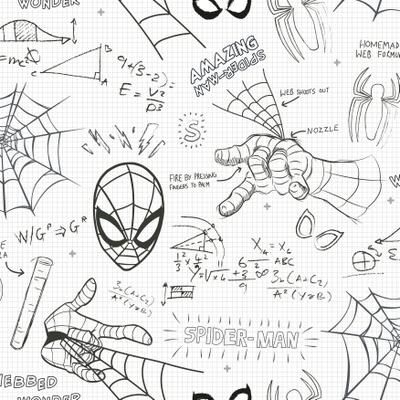
RoomMates-Spider-Man Superpowers Black and White Peel and Stick WallpaperBring Marvel's Spider-Man home with this sketch-style wallpaper, packed with web-shooter diagrams, masked close-ups, and handwritten equations sprawled across a grid paper background. Bring Marvel's Spider-Man home with this sketch-style wallpaper..59,99 $*Shipping: 0,00 $Secure redirect to the provider
-
RoomMates- Spider-Man Superpowers Red and Blue Peel and Stick WallpaperBring Marvel's Spider-Man home with this sketch-style wallpaper, packed with web-shooter diagrams, masked close-ups, and handwritten equations sprawled across a grid paper background.59,99 $*Shipping: 0,00 $Secure redirect to the provider
-
Can Spider-Man produce and shoot webs without his suit?
In most versions of the Spider-Man story, Peter Parker gains the ability to produce and shoot webs from his own body after being bitten by a radioactive spider. This ability is not dependent on his suit, so he can still produce and shoot webs even without wearing it. However, in some adaptations, such as the Sam Raimi Spider-Man movies, Peter invents web-shooters that he wears on his wrists to help him control his web-slinging abilities. **
-
What are dust-catching webs in spider webs called?
The dust-catching webs in spider webs are called "capture silk" or "gumfoot lines." These specialized silk threads are sticky and help the spider to capture prey by ensnaring them as they walk across the web. The capture silk is strategically placed in the web to maximize the spider's chances of catching insects and other small creatures. **
-
How are spider webs formed?
Spider webs are formed when a spider releases silk from its spinnerets, which are located at the back of its abdomen. The silk is produced as a liquid, but it quickly hardens into a solid thread when exposed to the air. The spider then uses its legs to pull and shape the silk into intricate patterns, creating the structure of the web. The design and shape of the web can vary depending on the species of spider and its hunting habits. **
-
Where can spider webs be found?
Spider webs can be found in a variety of locations, including outdoor areas such as gardens, forests, and fields. They can also be found indoors in places like basements, attics, and corners of rooms. Spider webs are commonly seen on bushes, trees, fences, and other structures where spiders can easily build their webs to catch prey. **
Similar search terms for RoomMates-Spider-Man-Webs-Charcoal-Peel
-
Inspired Finds Super Stretch Halloween Spider Webs With Fake Spiders Super Stretch Halloween Spider Webs With Fake SpidersTransform an ordinary room or yard into a creepy abandoned scene with Halloween spider webs that stretch into thin, realisticlooking strands. With up to 200 sq ft of coverage, this stretchable cobweb decoration gives you plenty of material for...34,99 $*Shipping: 0,00 $Secure redirect to the provider
-
Uplift Picks Super Stretch Halloween Spider Webs With Fake Spiders Super Stretch Halloween Spider Webs With Fake SpidersTurn your home into a creepy haunted scene with Halloween spider webs that stretch across up to 200 square feet. The soft webbing pulls apart easily, letting you create thin, realistic strands around doors, furniture, trees, and party displays....55,00 $*Shipping: 0,00 $Secure redirect to the provider
-
Where are there spider webs everywhere?
Spider webs can be found everywhere, but they are most commonly seen in outdoor areas with vegetation and in corners of buildings. They are also often found in dark, undisturbed areas such as basements, attics, and storage spaces. Additionally, spider webs can be found in areas with a high insect population, as spiders build their webs in locations where they are likely to catch prey. **
-
How do spiders create spider webs?
Spiders create spider webs by producing silk from their spinnerets, which are located at the back of their abdomen. The silk is made from proteins that are produced in the spider's silk glands and then forced through the spinnerets. The spider uses its legs to pull and shape the silk into the intricate patterns of the web. The silk is then left to harden and form the structure of the web, which the spider uses to catch prey. **
-
Why do we see spider webs, but no spider?
We may see spider webs without seeing the spider because spiders are often nocturnal and hide during the day. They may also be camouflaged within their surroundings, making them difficult to spot. Additionally, spiders may build their webs in hidden or hard-to-reach areas, further reducing the chances of seeing them. However, the presence of spider webs is a clear indication of the spider's activity in the area. **
-
What are Spider-Man's webs made of?
In the original Spider-Man comics, Peter Parker creates his web fluid using a formula of his own invention. The web fluid is a synthetic polymer that solidifies upon contact with air, creating the iconic webbing that Spider-Man uses to swing between buildings and capture villains. The exact composition of the web fluid has varied over the years in different adaptations, but it is typically depicted as a strong, adhesive substance that can be shot from devices on Spider-Man's wrists. **
* All prices are inclusive of VAT and, if applicable, plus shipping costs. The offer information is based on the details provided by the respective shop and is updated through automated processes. Real-time updates do not occur, so deviations can occur in individual cases. ** Note: Parts of this content were created by AI.